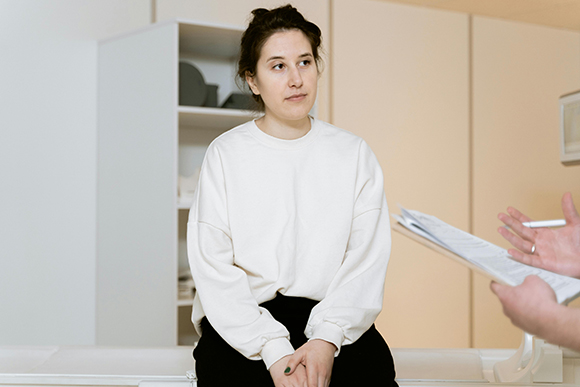
There are still gender disparities in health care, which means that many women do not receive appropriate care. This is not only a medical shortcoming, but also a violation of women's rights.
Journalist Mirjam Kaijer conducted research on unexplained health complaints among women. The results of a survey she conducted among 1,800 women showed that 65 percent of them feel unheard by their doctor or specialist. Of course, there are also men with unexplained health complaints but they are far outnumbered; 70 to 90 of patients with unexplained health complaints are women.
How gender inequality in healthcare affects women.
To begin, let's look at the ways in which there are differences in care for women.
Women are frequently misdiagnosed or underdiagnosed with serious conditions such as cardiovascular disease. According to the Dutch Heart Foundation (2023), as many as 60% of female heart patients go unrecognized initially. This is because their symptoms differ from those of men and current medical guidelines are largely based on research in male patients. Similarly, in autoimmune diseases, such as rheumatoid arthritis and lupus, it takes an average of four years longer for women to receive a correct diagnosis (Dutch Rheumatology Society, 2022). In addition, medications are often tested on men, leading to incorrect dosages and more side effects in women.
Research by ZonMw (2021) shows that women are on average 50 to 75% more likely than men to suffer side effects from drugs. This is because drug research often takes less account of differences in hormones, body weight and metabolism. As a result, women may suffer unnecessary side effects or may not be prescribed the most effective medication.
Women-specific conditions such as uterine, menstrual, hormonal or menopausal pain are often downplayed or insufficiently researched. As a result, diseases that affect only women receive less attention in research and development. Specific women's complaints are dismissed as something “that comes with the territory,” or as something “that's between the ears,” so women just have to tough it out. This violates their right to adequate care and pain management.
Additional barriers for women of color and trans women
For women of color and trans women, the situation is often even worse. Some conditions, such as sickle cell disease or the autoimmune disease lupus, are especially common among people of African descent. As many as 1 in 7 people of color are carriers of the sickle cell disease gene. It is incredibly important to be alert and tested for this. Yet there is often insufficient knowledge about these specific disorders, which means that the associated symptoms are not taken seriously or are not recognized. In addition, unconscious prejudices among care workers play a role, causing people of color to be treated differently. Research by Pharos, an organization dedicated to reducing major health disparities, confirms this.
Trans women often face insufficient knowledge about hormone therapy in health care, which can lead to incorrect dosages or improper counseling. Or their symptoms are sometimes too quickly linked to hormone use or the transition itself, rather than further investigation. Like women of color, they too face prejudice. Trans women of color are especially vulnerable in care because they face a stacking of all the previous obstacles.
What is happening in Flevoland?
We contacted several healthcare organizations in our province. GGD Flevoland indicates that within their services attention is paid to gender differences in how certain health complaints or symptoms manifest themselves. They use validated instruments and follow scientific standards.
Flever, the organization working on the transformation of the care and welfare sector in Flevoland, knows of no initiatives that contribute to gender inequality. They put the question out to their network, in which many (care) organizations participate, but no initiatives emerged here. Should there be organizations in the province that do actively implement this, we would like to hear about it and possibly add it to this article.
Are you dealing with gender inequality in healthcare? Voices for Women is committed to women-specific care. They offer lots of information and you can tell your story here.
As a healthcare organization in Flevoland, do you want to gain more insight into women-specific care and how to improve it? We conduct customized workshops on gender inequality and herein offer tools and insights to provide gender-sensitive care.
For more info, email info@bureaugelijkebehandeling.nl